MMF-based garment exports grow 14.1%, signal structural shift in Bangladesh RMG
Share This
Bangladesh's ready-made garment (RMG) industry is facing a major change. Man-made fibre (MMF) products now drive export growth. New data from the Export Promotion Bureau (EPB) shows the shift. In the first half of FY2025–26 (July–December), total RMG exports hit $19.36 billion. That's a 2.63 per cent drop from last year. But MMF products bucked the trend.

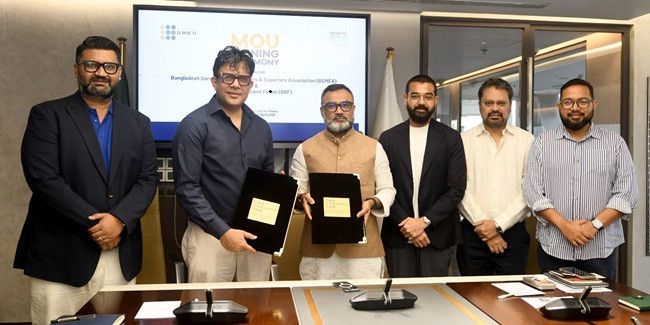
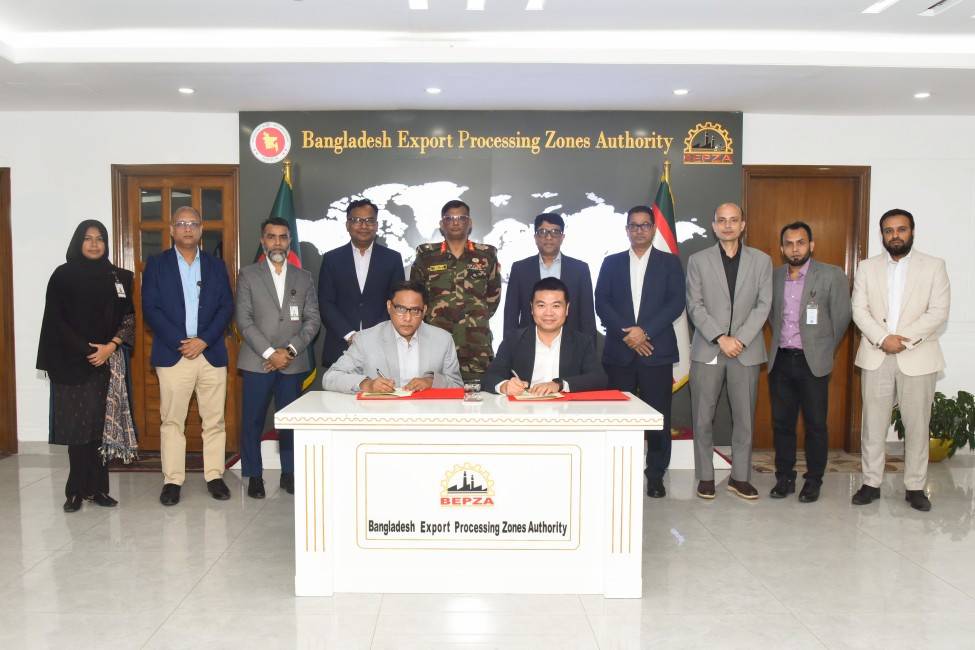
While supplementary duties on specialised fabrics were cut from 20 to 10 per cent. Courtesy: Collected
Table 1: Bangladesh RMG Export Performance and YoY Growth (H1 FY2025–26)
Reporting Period: July–December 2025 vs. July–December 2024
|
Metric |
H1 FY2025–26 (Million USD) |
H1 FY2024–25 (Million USD) |
YoY Growth |
|
Total RMG Exports |
$19,365.43 |
$19,887.70 |
-2.63% |
|
Cotton-based Exports |
$15,685.43 |
$16,662.00 |
-5.86% |
|
MMF-based Exports |
$3,680.00 |
$3,225.70 |
+14.1% |
|
MMF Share of RMG |
19.0% |
11.4% (Full Year 2024) |
Upward Trend |
Source: Export Promotion Bureau (EPB), Bangladesh
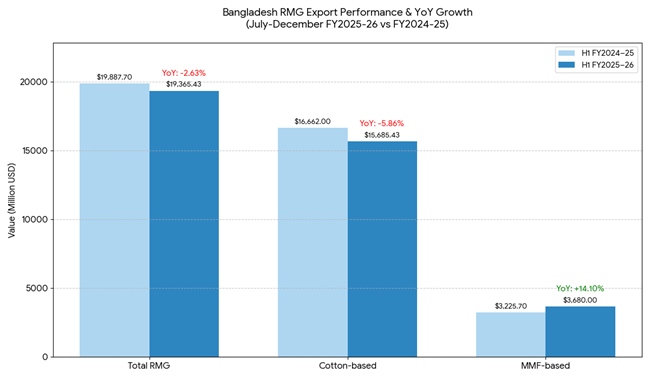
Note: MMF share surged to a record high, signaling a structural shift in Bangladesh's RMG exports.
Bangladeshi manufacturers are rapidly adapting to this demand shift. Order books are increasingly dominated by polyester-rich activewear, functional knitwear, and recycled PET-based outerwear. Industry analysts note that the growth of athleisure, remote-work clothing, and climate-resilient apparel has permanently altered global fibre demand patterns.
MMF garments also offer higher commercial returns. These products carry higher unit prices due to functional performance requirements, testing standards, and sustainability compliance. This product also allows suppliers to move beyond volume-driven manufacturing into higher value-added segments involving fabric engineering and design input.
Government policy has reinforced this shift. Recognising the need to reduce overdependence on cotton, the FY2025–26 national budget introduced targeted incentives to lower MMF input costs.
According to the Ministry of Finance, import duties on polypropylene yarn were reduced from 10 to 5 per cent. While supplementary duties on specialised fabrics were cut from 20 to 10 per cent. These adjustments directly support segments such as sportswear, medical textiles, and technical garments. These are the areas where Bangladesh previously faced cost disadvantages.
Table 2: Key MMF-related Indicators and Policy Signals (Status as of December 2025)
|
Indicator |
H1 2025–26 Status |
Industry Significance |
|
MMF Export Earnings |
$3.68 Billion |
High-growth engine offsetting cotton losses |
|
YoY Growth (MMF) |
+14.1% |
Outpacing cotton growth by nearly 20% |
|
Polypropylene Duty |
5% |
Budget policy sustaining growth in sportswear |
|
Long-term Target |
40% by 2030 |
Diversification goal to sustain competitiveness |
Source: Export Promotion Bureau; Ministry of Finance, Bangladesh
Despite progress, structural gaps remain. Nearly 80 per cent of PET chips and specialised MMF yarns are still imported, mainly from China. Countries such as China and Vietnam have already built deep MMF backward linkages, allowing them to respond quickly to fabric innovation and buyer-led design changes.
Energy shortages in late 2025 increased production costs by 30–40 per cent, while upcoming EU sustainability rules will require further investment in recycled fibre capacity and traceability systems.
Bangladesh targets $100 billion in apparel exports by 2030. MMF is increasingly positioned as the industry’s core growth engine, also critical for export resilience, higher value addition, and long-term competitiveness.