BTMA announces indefinite shutdown of all textile mills from February 1
Share This
The Bangladesh Textile Mills Association (BTMA) has warned that all spinning mills across the country will be shut down indefinitely from February 1, 2026, if the government fails to implement the Ministry of Commerce’s recommendation to withdraw bonded warehouse facilities on the import of 10–30 count yarn.

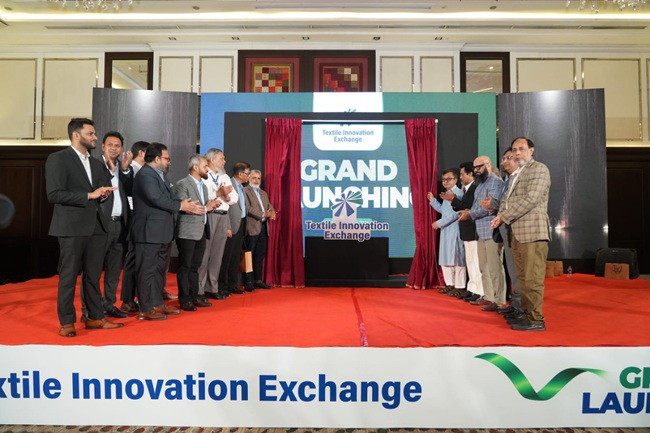
The warning was issued on Thursday, January 22, 2026, at an emergency press conference held at the BTMA office in Karwan Bazar, Dhaka, chaired by Showkat Aziz Russell, President, BTMA.
BTMA leaders said that unless the recommendation is implemented within the next seven days, the primary textile sector will face an extreme crisis, making continued operations impossible. They cautioned that any labour unrest arising from factory closures would be the sole responsibility of the government.
“If any instability arises in the banking and financial sector due to this situation, the government will have to bear full responsibility,” BTMA leaders said.
According to the association, for the past 30 days, spinning mills have been operating at only around 50 percent capacity, leading to an estimated Tk 12,000–15,000 crore in losses. With cash flows severely constrained, mill owners warned that repayment of bank loans and financial liabilities has become unfeasible, posing risks to the broader financial system.
Russell described the situation as a “state of emergency” for the textile industry.
“Although the textile sector contributes around 13 percent to the country’s GDP, the interim government does not even spend 13 minutes listening to our problems,” he said.
He further alleged that instead of resolving the crisis, government agencies are passing responsibility from one ministry to another.
“At inter-ministerial meetings, we are witnessing a continued practice of pillow passing,” Russell added.
BGMEA’s position and industry coordination
BTMA leaders also referred to discussions with the Bangladesh Garment Manufacturers and Exporters Association (BGMEA), stating that the apparel body has acknowledged the severity of the spinning sector’s crisis and its potential ripple effects across the entire apparel value chain.
According to BTMA, BGMEA representatives have recognized that continued dependence on low-cost imported yarn, enabled through bonded warehouse facilities, is undermining domestic spinners, weakening backward linkage industries, and increasing long-term supply risks for garment exporters themselves.
BTMA claimed that local spinning mills are capable of meeting 50–70 percent of the country’s yarn demand, and warned that if spinning capacity collapses, garment manufacturers will face higher import dependence, longer lead times, and increased exposure to global price volatility.
The association stressed that protecting the spinning sector is not a conflict between spinners and garment exporters, but a strategic necessity for sustaining Bangladesh’s integrated textile and apparel ecosystem.
Policy recommendation is still pending
BTMA leaders pointed out that the Ministry of Commerce, after reviewing the situation, recommended withdrawing bonded warehouse facilities on imported yarn of counts 10, 20, and 30, under HS codes 52.05, 52.06, and 52.07, with a proposed implementation timeline of 30 working days. However, the recommendation has yet to be enforced.
They warned that continued policy delay would accelerate mill closures, job losses, loan defaults, and financial stress across the sector.
BTMA urged the government to immediately implement the commerce ministry’s recommendation, stating that decisive action is essential to protect domestic value addition, maintain industrial stability, safeguard employment, and prevent deeper economic fallout.