Deeper reforms, greater market access and clearer commitments amid LDC-graduation transition
EU envoys call on Bangladesh for deeper reforms to boost investment and rebalance trade
Share This
European businesses and diplomats have called on Bangladesh to increase its imports from the European Union (EU), signalling a stronger push from the bloc to rebalance a historically one-sided trade relationship. The discussion gained renewed urgency after Bangladesh’s recent commitment to the United States to reduce its trade gap under a reciprocal tariff arrangement.

At a high-level dialogue on business climate held at the Bangladesh Investment Development Authority (BIDA) in Dhaka, EU Ambassador Michael Miller emphasised the need for “teamwork, a level playing field and impartial implementation” as the EU and Bangladesh work toward a more comprehensive investment partnership.
Growing pressure for reciprocal commitments
The EU remains Bangladesh’s single largest export destination, but the trade structure is deeply uneven. According to recent European Commission data, total goods trade in 2024 reached €22.2 billion, with the EU registering a €17.5 billion deficit. Garments and textiles accounted for nearly 94% of EU imports from Bangladesh, while the EU’s exports to Bangladesh were dominated by machinery, appliances, and chemicals.
With Bangladesh agreeing to purchase more American goods — including soybeans, wheat, aircraft, LNG, and heavy machinery — European missions are now seeking similar commitments. Their argument is straightforward: without higher imports of European machinery, industrial inputs, and technology, rebalancing the deficit will be difficult.
EuroCham Bangladesh Chairperson Nuria Lopez stressed that as Bangladesh prepares to graduate from the LDC category next year, attracting high-quality European investment will require “predictable regulation, faster reforms, and clearer standards and enforcement.”
Reforms, governance, and the post-LDC transition
Across the dialogue, European envoys highlighted recurring issues that hinder deeper investment: regulatory delays, uneven enforcement, complex import procedures, and unpredictable policy shifts.
The Dutch, Danish, Italian, Spanish, Swedish, French, and German missions echoed a common message — Bangladesh can unlock new European FDI only if governance, predictability, and transparency improve in tandem with large-scale infrastructure modernization.
Key issues repeatedly flagged include:
-
Slower regulatory approvals are impacting FDI.
-
Profit repatriation bottlenecks
-
Customs inefficiencies are affecting machinery and raw material imports.
-
Need for faster digitalization across ports and logistics.
-
Skills development gaps in mid-to-high-tech manufacturing
-
Absence of an updated double taxation agreement
German Acting Ambassador Anja Kersten particularly highlighted the need for consistent implementation of ongoing reforms rather than new commitments alone.
Bangladesh’s response: reforms underway, but expectations rising
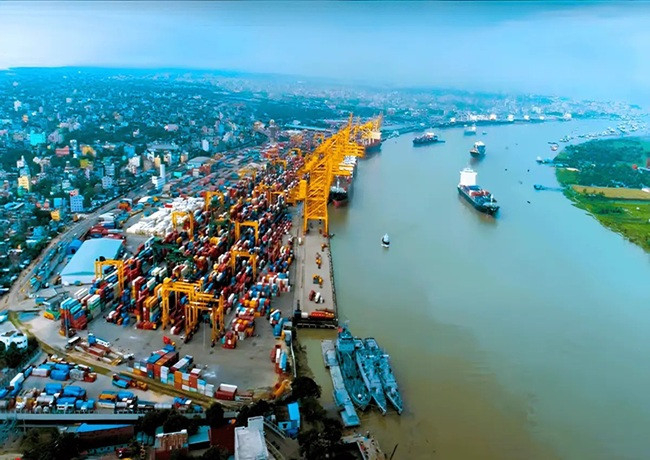
From the government side, Chittagong Port Authority Chairman Rear Admiral SM Moniruzzaman cited major modernization projects, including the Bay Terminal and Laldia facility, aimed at improving port capacity, vessel turnaround time, and digital operations.
BIDA Executive Chairman Ashik Chowdhury underscored structural reforms, investor grievance resolution mechanisms, and annual “result cards” designed to rebuild foreign investor confidence. He also noted that Bangladesh wants more EU companies to establish regional hubs in the country.
Lutfey Siddiqi, special envoy to the chief adviser, stressed that Bangladesh must engage early with Brussels as LDC preferences begin to phase out. Clear policy signals, he said, will determine Bangladesh’s post-LDC competitiveness.
Strategic implications for Bangladesh’s textile and apparel industry
For the export-driven textile and apparel sector, the EU’s call carries strategic consequences. The bloc is not only Bangladesh’s largest market but also its most demanding in terms of sustainability, labour, political governance, and responsible business conduct.
As Bangladesh navigates simultaneous pressures from the US, EU, and domestic economic adjustments, the next phase of reforms will influence:
-
Long-term competitiveness under the EU’s evolving GSP rules
-
Machinery and technology imports are essential for upgrading production.
-
Compliance expectations shaping buyer confidence.
-
Investment diversification beyond low-value segments
The central message from Europe remains clear: deepening trade ties requires a more balanced relationship — one that includes not only exports but also higher imports, stronger governance, and sustained reforms.