Gas, river transport & low costs
Bhola’s rise as investment hub
Share This
Bhola, a southern island district of Bangladesh, is rapidly emerging as a major industrial hub, attracting both local and foreign investment worth billions of takas. Investors are drawn by the district’s abundant gas reserves, river transport connectivity, and comparatively low labour and land costs.

Pran-RFL Group has initiated land development on 1,000 bighas in Char Veduria, Bhola Sadar, planning one of the country’s largest industrial parks with a total investment of Tk6,000 crore. The park, expected to create more than 25,000 direct jobs, will house factories producing high-energy items such as pipes, floaters, chairs, water tanks, doors, toys, footwear, ceramics, and glassware. Small-scale production is slated to begin in 2026, with full operations planned by 2028.
Export-oriented Urmi Group is investing Tk1,000 crore ($80 million) to build a 35-acre synthetic and man-made fibre facility in Bhola’s Veduria union. The factory will supply fibre for Urmi’s own garment and textile units while exporting surplus, with production expected to start by 2027.
Liz Fashion Industries Ltd has received Bangladesh Economic Zones Authority (Beza) approval for the Bhola Eco Development Economic Zone. The first phase covers 102 acres and is set to expand to 158 acres, targeting $1 billion in investment. The zone will host 40 environmentally friendly, labour-intensive, and agro-based industries, including fish processing, meat and dairy, agro-products, and handicrafts. Officials say the free trade zone could open new export channels for local agricultural products to China.
Founded in 1997, Liz Fashion Industry Limited is a prominent Chinese textile and apparel manufacturer and exporter based in Bangladesh, producing outerwear, sportswear, and underwear for leading global brands. Known for its strong quality standards, vertical integration, and sustainable operations, including its LEED Platinum–certified green factory in Gazipur, the company also maintains strategic business connections with a China-based partner firm, strengthening its supply chain, technical capabilities, and global sourcing reach.
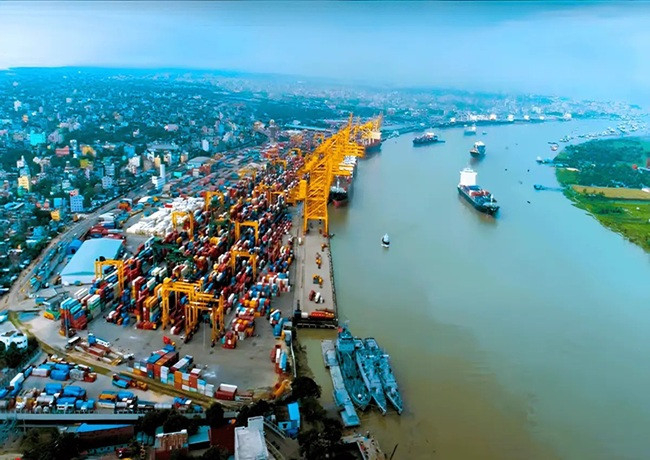
Industry observers say Bhola’s rise is driven by abundant natural gas, river access to Chattogram and Mongla ports, and lower labour and land costs compared to traditional industrial hubs such as Gazipur, Narayanganj, and Habiganj. Kutubuddin Ahmed, chairman of Sheltech Group, which established Bangladesh’s largest ceramic plant in Bhola in 2017, noted that local resources and lower costs have already generated significant operational benefits.
The government is also exploring the feasibility of a urea fertiliser plant in Bhola using local gas reserves. On 14 November, advisers from the interim government visited proposed sites near Veduria ferry ghat to assess the project. A fertiliser buffer warehouse in Bhola is expected to be completed by 2027.
Gas infrastructure in the district is expanding, with pipeline connections already provided to Sheltech, Kazi Farms, Pran-RFL, Urmi Group, and other industries. Engr Oliur Rahman of Sundarbans Gas Company Limited confirmed that new industrial entrants would receive gas connections once regulatory requirements are met.
Md Azad Jahangir, former deputy commissioner of Bhola, described the district as being on the threshold of a major industrial transformation. “With growing interest from local and foreign investors, Bhola is set to become the largest industrial hub in the south. Once these factories are operational, no youth in Bhola will remain unemployed,” he said.